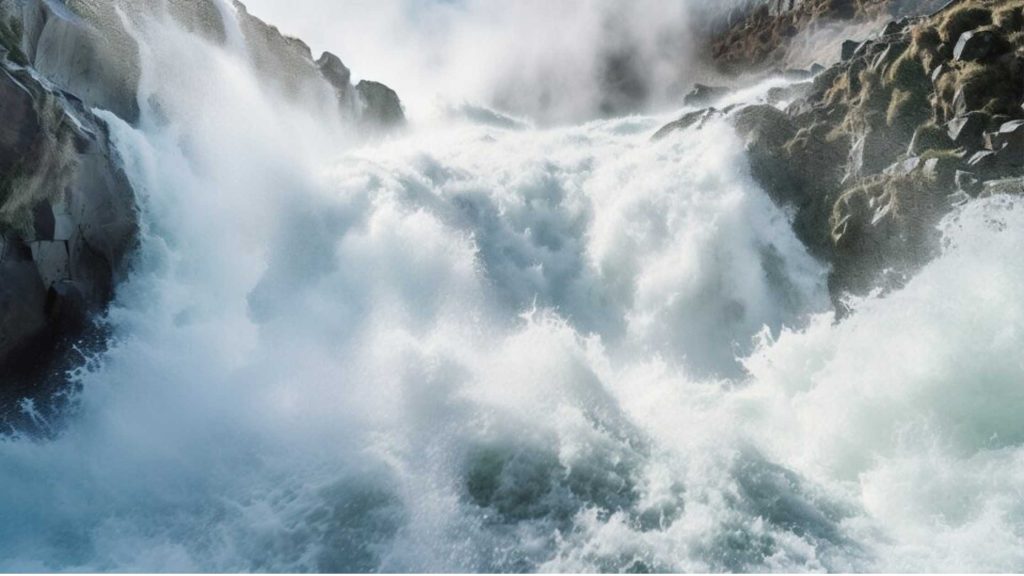
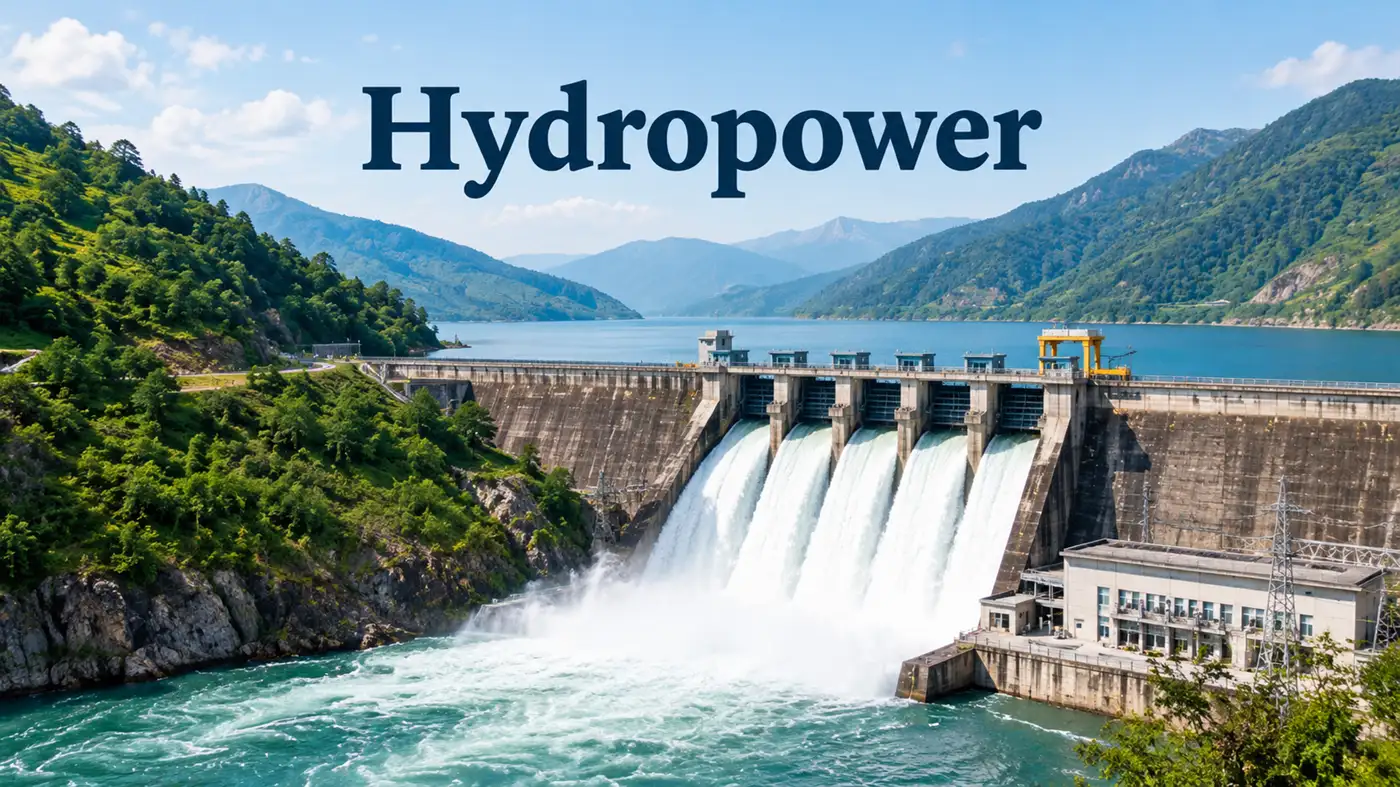
Hydropower, also known as hydroelectric power, is a form of renewable energy that generates electricity using the movement of water. It is one of the oldest and most widely used sources of renewable electricity in the world. Hydropower plants are commonly built near rivers, reservoirs and other water bodies where flowing or stored water can be used to turn turbines.
Since the demand for clean and reliable energy is still increasing, hydropower is playing an important role in reducing our reliance on fossil fuels. It is able to generate electricity on a large scale and at the same time contribute to energy security and, in certain cases, to water management.
How Does Hydropower Work?
Hydropower plants convert the energy of moving water into electrical energy. In a typical hydroelectric power plant, water stored in a reservoir is released through a controlled passage called a penstock. As the water flows downward, its force causes a turbine to rotate.
The rotating turbine is connected to a generator. When the turbine spins, the generator converts the mechanical energy into electrical energy. The electricity is then transmitted through power lines to homes, businesses and industries.
The quantity of electricity produced will depend on things like the amount of water available and the height from which the water falls; the more water that flows and the greater the height difference usually mean that the power station can generate more electricity.
Types of Hydropower Plants
Hydropower systems can be designed in different ways depending on the availability and movement of water.
Storage Hydropower
Storage hydropower plants use dams and reservoirs to store water. The stored water can be released when electricity is needed, allowing these plants to provide a relatively controllable source of power.
Run-of-River Hydropower
Run-of-river plants generate electricity using the natural flow of a river, with limited water storage. Their electricity generation can therefore vary depending on river conditions and seasonal water availability.
Pumped Storage Hydropower
Pumped-storage hydropower functions as a large-scale energy storage system: when electricity demand is low, water is pumped into a higher reservoir and when demand for electricity rises, the water is released via turbines to produce electricity.
Advantages of Hydropower
Hydropower offers several benefits as part of a renewable energy system.
Renewable Source
Hydropower relies on the natural water cycle, making it a renewable source of energy when water resources are managed sustainably.
Low Operational Emissions
Hydropower plants generally produce very low direct greenhouse gas emissions during electricity generation compared with fossil-fuel-based power plants.
Reliable Electricity
Unlike some renewable sources that depend directly on sunlight or wind, many hydropower plants can produce electricity according to demand, depending on their design and water availability.
Energy storage can be achieved through pumped-storage hydropower, which stores electricity and then releases it when needed, thus helping to balance the electricity grid.
Due to proper maintenance, hydropower facilities are capable of operating for many decades.
Challenges of Hydropower
Despite its benefits, hydropower can also have environmental and social impacts. Large dams may flood land and alter natural river ecosystems. They can affect fish migration, sediment movement and downstream water flows. Reservoir construction may also require communities to relocate.
Hydropower generation can also be affected by droughts and changing rainfall patterns. Therefore, careful planning and environmental assessment are important when developing hydropower projects.
Hydropower in India
India has a great deal of potential for producing hydropower due to its rivers and hilly areas. For many years now, hydroelectric projects have been part of the country’s electricity supply. Those states and regions which have suitable river systems and variations in elevation have particularly strong potential for the development of hydropower.
Hydropower is also important for India’s renewable-energy transition because it can complement variable sources such as solar and wind power. Pumped-storage projects can further support the electricity grid by storing energy and supplying it when demand is high.
The Future of Hydropower
The future of hydropower will depend not only on increasing electricity production but also on developing projects responsibly. Modern planning increasingly focuses on reducing ecological disruption, improving the efficiency of existing facilities and using pumped storage to support renewable energy integration.
As nations move towards cleaner electricity systems, hydropower can keep on acting as an important source of renewable electricity and energy storage. But its development must take into account both energy needs and environmental protection as well as the requirements of local communities.
FAQs about Hydropower
Hydropower turns the natural energy of flowing water into electricity and is still a significant part of renewable energy systems. It is able to supply a steady amount of power, help to maintain stability of the electricity grid and lessen the need for fossil fuels. At the same time, however, hydropower projects can have an impact on rivers, ecosystems and local communities, which means that careful planning is essential. By developing it carefully and using better technologies, hydropower can keep on helping to create a more reliable and sustainable energy future.