As the world looks for alternatives to fossil fuels and ways to make better use of organic waste, biomass has become an important renewable resource. Biomass refers to organic material obtained from plants, animals, and other biological sources that can be used to produce energy, fuels, heat, and other useful products.
Agricultural residues, forestry waste, animal manure and organic municipal waste are some of the materials that can be used as biomass. When managed responsibly, biomass can help turn organic waste into a useful resource while supporting renewable energy production.
What is Biomass?
Biomass is biological material derived from living or recently living organisms. In the context of energy production, it commonly refers to organic materials that can be converted into heat, electricity, fuels, or other forms of energy.
Plants store energy from sunlight through photosynthesis. This stored chemical energy can later be released when biomass is processed or converted into energy.
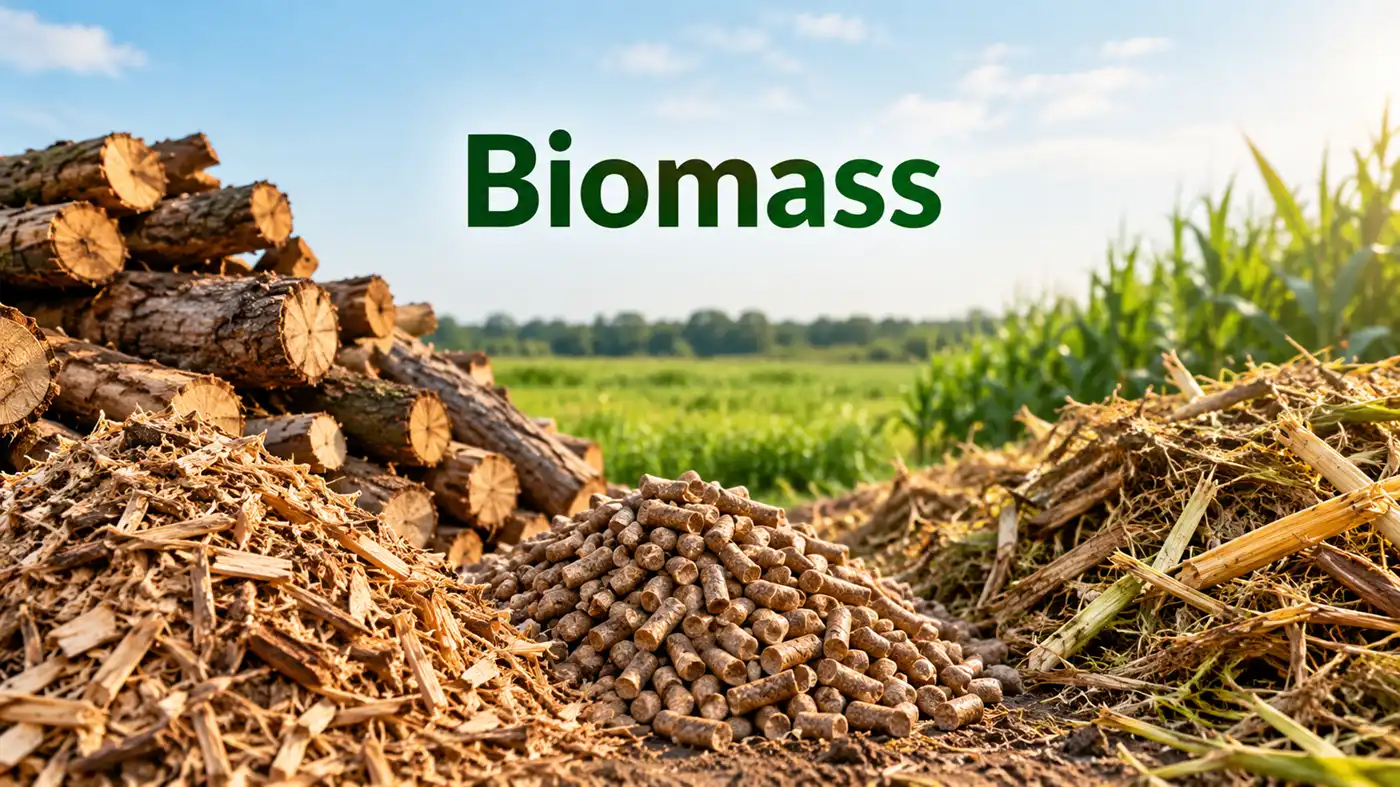
Common examples of biomass include wood, crop residues, animal manure, food waste, and certain types of organic industrial waste.
Sources of Biomass
Biomass can come from several different sources.
Agricultural Residues
Crop residues such as straw, husks, stalks, shells and other agricultural by-products can be used as biomass. Using some agricultural residues for energy can provide an additional use for materials that might otherwise be discarded or burned.
Forestry Resources
Wood, branches, bark, sawdust, and other forestry by-products can be used for biomass energy. Sustainable sourcing is important to avoid putting unnecessary pressure on forests.
Animal Waste
Animal manure and other livestock waste can be used to produce biogas through anaerobic digestion. The remaining material can also have applications as a soil amendment when appropriately processed.
Food and Organic Waste
Food scraps and other biodegradable organic waste can be converted into biogas or processed through other biological methods.
Energy Crops
Certain plants can be specifically cultivated for energy production. Their suitability depends on factors such as climate, water availability, land requirements, and their potential impact on food production and ecosystems.
Types of Biomass
Biomass can be classified according to its source and composition
- Woody biomass includes materials such as firewood, wood chips, sawdust and forestry residues.
- Agricultural biomass includes crop residues such as rice husks, wheat straw, sugarcane residues and other agricultural by-products.
- Animal biomass includes livestock manure and other biological waste from animal farming.
- Municipal organic biomass includes biodegradable materials such as food and garden waste.
These different forms of biomass require different technologies for processing and energy conversion.
How is Biomass Used?
Biomass can be converted into several useful forms of energy and products.
Heat and Cooking
Wood, agricultural residues, and other biomass materials can be directly burned to produce heat. Improved biomass stoves and boilers can make this process more efficient than traditional burning methods.
Electricity Generation
Biomass can be burned directly or converted into a fuel that is then used to generate electricity. Biomass power plants can use materials such as agricultural residues, wood waste, or other suitable organic materials.
Biogas Production
Organic waste is capable of being subjected to anaerobic digestion, which is a biological process involving microorganisms decomposing organic material in the absence of oxygen. This process results in the production of biogas, mostly composed of methane and carbon dioxide, which can then be used as a fuel.
Biofuels
Biomass can also be processed into liquid fuels such as ethanol and biodiesel. These fuels can be used in certain transport and industrial applications.
Biochar
Some biomass can be heated under controlled conditions with limited oxygen to produce biochar, a carbon-rich material that can have applications in soil management and other areas.
Benefits of Biomass
Renewable Energy Source
Biomass is regarded as a renewable resource when biological resources are managed and replenished in a responsible manner, since plants can regrow and organic waste is constantly produced as a result of agricultural, forestry, and household activities.
Waste Management
Using agricultural and organic waste as biomass can provide an alternative to simply dumping or openly burning certain waste materials.
Supports Rural Economies
Biomass supply chains can create opportunities for farmers, waste collectors, transporters and processing facilities, particularly in areas with significant agricultural activity.
Can Reduce Dependence on Fossil Fuels
Biomass can replace some fossil fuel use in applications such as heating, electricity generation and fuel production, depending on the technology and available feedstock.
Multiple Applications
Biomass is versatile and can be converted into heat, electricity, biogas, biofuels and other products.
Challenges of Biomass
Biomass is not automatically sustainable simply because it comes from biological material.
Large-scale biomass production can require land, water and other resources. If forests are harvested unsustainably or energy crops compete with food production, environmental and social concerns may arise.
Particulate matter and other pollutants may also be given off when biomass is burned if the combustion systems are inefficient or not well controlled. The total climate impact will depend on various factors, including the source of the biomass, changes in land use, processing, transportation and the efficiency with which it is used.
Because of the reasons mentioned above, sustainable sourcing and the use of suitable technology are essential.
Biomass and the Environment
The environmental impact of biomass depends heavily on how it is produced, collected, and used. Agricultural residues and organic waste can sometimes provide useful feedstocks without requiring additional land.
The removal of excessive crop residues from fields may have an effect on soil organic matter and nutrient cycling. In the same way, the use of wood from forests without proper management can lead to environmental degradation.
A biomass system if it is to be sustainable must take into account the full life cycle of the resource, from the stage of its production and collection through to processing, transport, and its final use.
Biomass in Agriculture
Agriculture is an important source of biomass because farming generates large quantities of organic residues. Instead of treating these materials solely as waste, farmers can use appropriate residues for composting, animal feed, bioenergy, biogas, or other applications.
For instance, livestock manure may be put into biogas plants and certain crop residues can act as feedstock for biomass energy systems. The most suitable application will vary according to local conditions and to the part that the material plays in keeping the soil healthy.
Biomass in India
India has significant biomass resources because of its large agricultural sector and diverse range of crops. Materials such as rice husks, sugarcane residues, cotton stalks, groundnut shells and other agricultural by-products can potentially be used for energy and other applications.
Biomass-based systems can also be relevant to rural areas where agricultural residues and animal waste are readily available. Developing efficient collection, storage, and processing systems is important for making these resources economically useful.
FAQs about Biomass
Biomass is an important renewable resource that can connect agriculture, waste management and energy production. Materials such as crop residues, wood waste, animal manure and organic waste can be converted into heat, electricity, biogas, biofuels and other useful products.
The sustainability of biomass is based on responsible sourcing and efficient use; it can help in reducing waste, in diversifying energy sources and in making better use of biological resources when it is properly managed.