Solar thermal energy is a form of renewable energy that uses sunlight to produce heat. Unlike solar photovoltaic (PV) technology, which converts sunlight directly into electricity, solar thermal systems capture the sun’s heat and use it for applications such as water heating, cooking, industrial processes, and electricity generation.
As the world looks for cleaner, more sustainable forms of energy, solar thermal is coming into its own as a significant technology. It has the potential to reduce our dependence on fossil fuels, lower our energy bills and reduce our emissions of greenhouse gases.
How Does Solar Thermal Energy Work?
Solar thermal systems work by collecting sunlight and converting it into thermal energy, or heat. The collected heat is transferred to a fluid, such as water or a heat-transfer liquid, which can then be used directly or stored for later use.
The basic working process involves:
- Solar collectors absorb the sun’s rays and convert them into heat.
- A heat transfer fluid circulates through the system and takes up the heat that has been collected.
- The hot fluid transfers its energy to the water (or other medium) via a heat exchanger or can supply the heat directly to the application.
- In systems equipped with thermal storage, the heat can be stored in insulated tanks or other storage materials for use when sunlight is unavailable.
The design of the system depends on its intended application, temperature requirements, and local climatic conditions.
Types of Solar Thermal Systems
Solar thermal systems are generally classified by their temperature range and by technology.
1. Low-Temperature Solar Thermal Systems
These systems work at fairly low temperatures and are predominantly used for domestic and commercial water heating. Solar water heaters in homes, hotels, hospitals, and swimming pools are all examples of low-temperature applications.
2. Medium Temperature Solar Thermal Systems
Medium temperature systems provide the heat for applications that need a higher temperature from normal water heating. They can be used for a range of industrial processes, food processing, drying, and various commercial heating applications.
3. High Temperature Solar Thermal Systems
High temperature systems use concentrated sunlight to produce very high temperatures. They’re the systems of choice in most concentrated solar power (CSP) plants where mirrors or lenses are used to concentrate the sunlight onto a receiver. The heat generated can then be used to produce steam to drive a turbine and generate electricity.
Common Solar Thermal Technologies
Some widely used solar thermal technologies include:
- Flat Plate Collectors: These collectors absorb sunlight through a dark surface and transfer the heat to water or another fluid. They are commonly used for domestic water heating.
- Evacuated Tube Collectors: These systems use insulated glass tubes to reduce heat loss and improve performance, particularly in colder conditions.
- Concentrating Solar Collectors: These systems use mirrors or lenses to concentrate sunlight onto a smaller receiver to produce higher temperatures.
- Solar Cookers: These devices use sunlight to cook food, reducing the need for conventional fuels.
- Solar Air Heaters: These systems capture solar heat and use it to warm air for buildings, crop drying and other applications.
Uses of Solar Thermal Energy
Solar thermal energy has a wide range of applications across residential, commercial, agricultural and industrial sectors.
Domestic Water Heating
Solar water heaters are used in homes and buildings to heat water for bathing, cleaning and other household activities. They can reduce electricity or fuel consumption for water heating.
Industrial Heating
Industries have a requirement for heat in processes such as washing, drying, pasteurization, and manufacturing. Solar thermal can provide part of that heat requirement depending on the temperature and the way the process is run.
Electricity Generation
Concentrated solar power plants use mirrors to concentrate the sun’s rays and generate very high-temperature heat. This heat is used to produce steam, which in turn drives the turbines connected to the electricity generators.
Agricultural Applications
Solar thermal can be used to support a range of agricultural activities including crop drying, greenhouse heating and water heating. Solar dryers, for instance, can be used to dry crops and thus reduce the need for conventional drying fuels.
Solar Cooking
Solar cookers use reflected or trapped sunlight to prepare food. They can be useful in areas with good sunlight availability and help reduce the consumption of firewood and other cooking fuels.
Space Heating and Cooling Support
Solar thermal can provide heat for buildings and, with the right equipment, can be used to provide cooling via solar-driven absorption or adsorption systems.
Benefits of Solar Thermal Energy
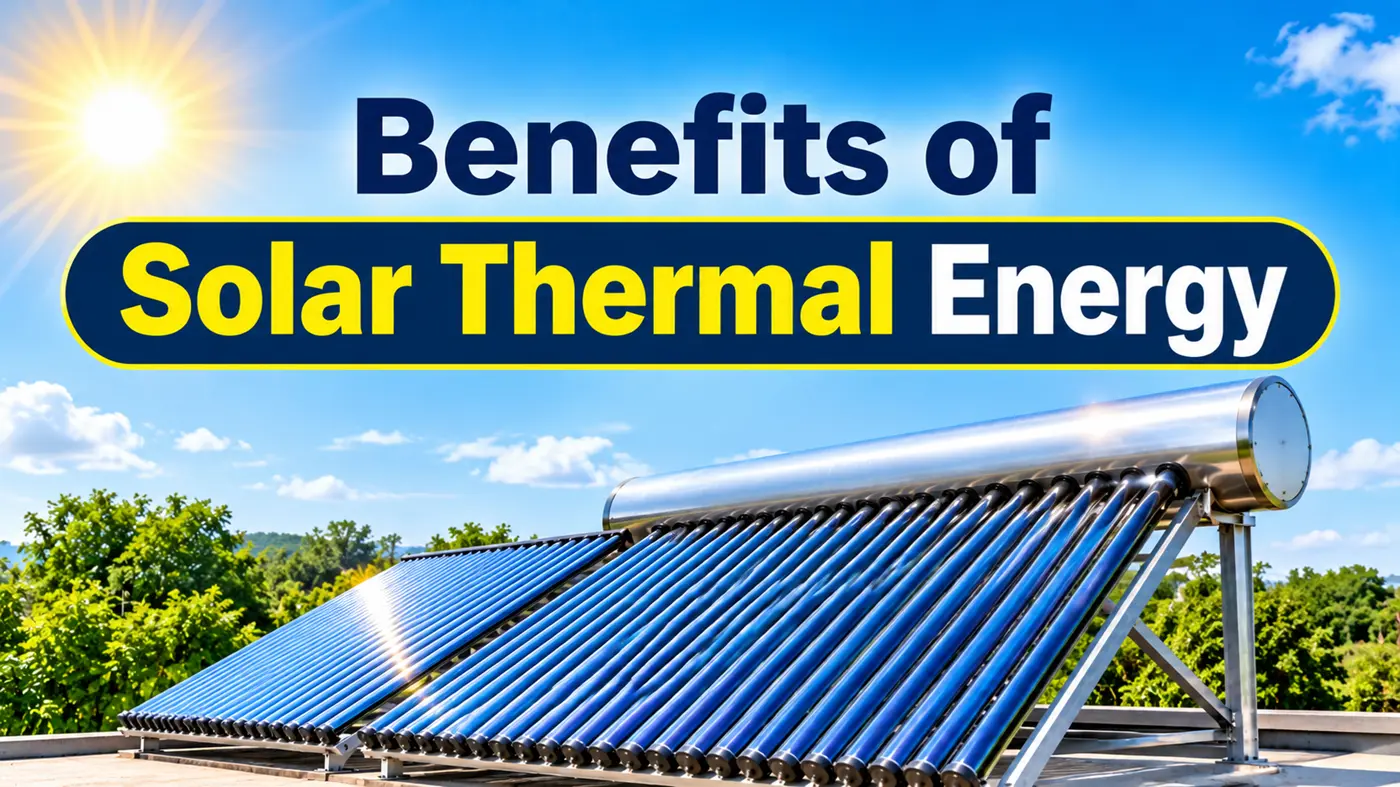
Solar thermal energy offers several environmental, economic, and practical advantages.
- Renewable Energy Source: It uses sunlight, which is naturally replenished and widely available.
- Lower Energy Bills: Solar water heating and other systems can reduce the amount of purchased electricity or fuel required.
- Reduced Emissions: Replacing fossil-fuel-based heating with solar heat can lower greenhouse gas emissions.
- Multiple Applications: It can be used in homes, businesses, industries, and agricultural operations.
- Thermal Energy Storage: Some systems can store heat for later use, helping provide energy even when sunlight is temporarily unavailable.
- Reduced Dependence on Conventional Fuels: Solar thermal technology can help diversify energy sources and improve energy security.
Challenges of Solar Thermal Energy
- Weather Dependence: Performance is dependent on the amount of sunlight and will therefore be reduced during periods of cloudiness or rain.
- Initial Installation Cost: The solar collectors, storage tanks, and associated equipment will all have a high upfront cost.
- Space Requirements: Some systems, especially large solar thermal installations, need considerable roof or land area.
- Maintenance: Collectors, pumps, pipes, and storage systems require periodic inspection and maintenance.
- Storage and Backup Needs: Continuous heat supply may require thermal storage or a supplementary heating system.
Solar Thermal Energy vs Solar Photovoltaic Energy
Solar thermal and solar photovoltaic technologies both use sunlight, but they produce different forms of energy.
The two technologies can complement each other. Solar thermal systems are useful when heat is required, while photovoltaic systems are suitable for generating electricity.
The Future of Solar Thermal Energy
Solar thermal energy has considerable potential as countries work towards cleaner energy systems. Improvements in collector design, heat-storage materials and concentrated solar power technology may make these systems more efficient and versatile.
In India, where so many areas get ample sunshine, solar thermal can be used for domestic water heating, for processing of agricultural produce, for commercial buildings and for industrial process heat. Its wider adoption would contribute to energy conservation and to the move towards renewable energy.
However successful it is in the end, it all comes down to picking the right system, looking at the actual levels of sun available at the site, looking at the heat demand and then, of course, the need for maintenance.
FAQs about Solar Thermal Energy
Solar thermal is a very effective way of using the sun’s energy to produce heat. It can be used for everything from heating water in the home and drying agricultural produce through to providing process heat for industry and the generation of electricity via concentrated solar power. The challenges of installation cost, weather dependence, and the need for storage are all real, but the technology can be improved upon and, in time, will play a greater role in the renewables sector. It’s a way of reducing our dependence on fossil fuels and making better use of the sun’s energy.