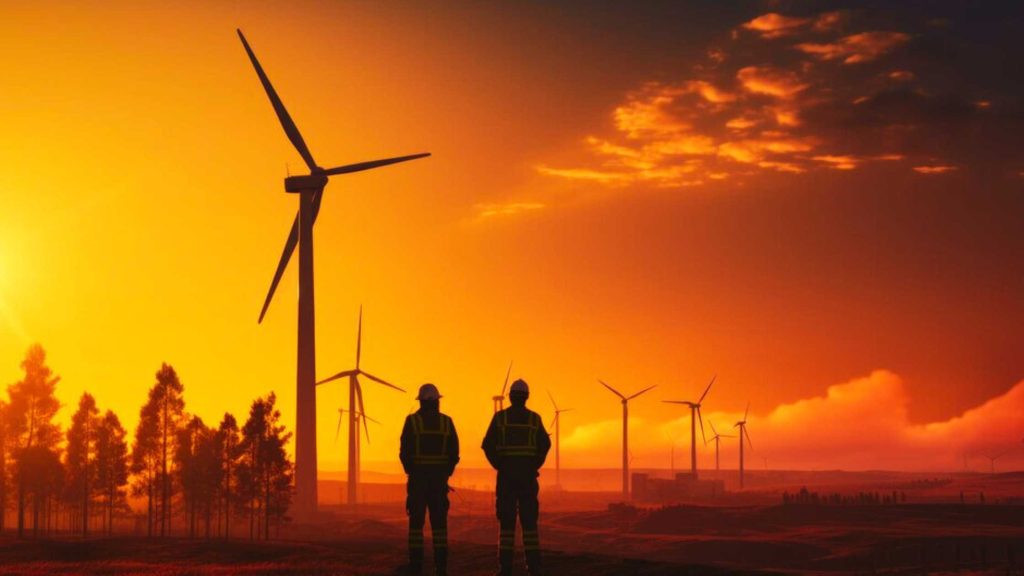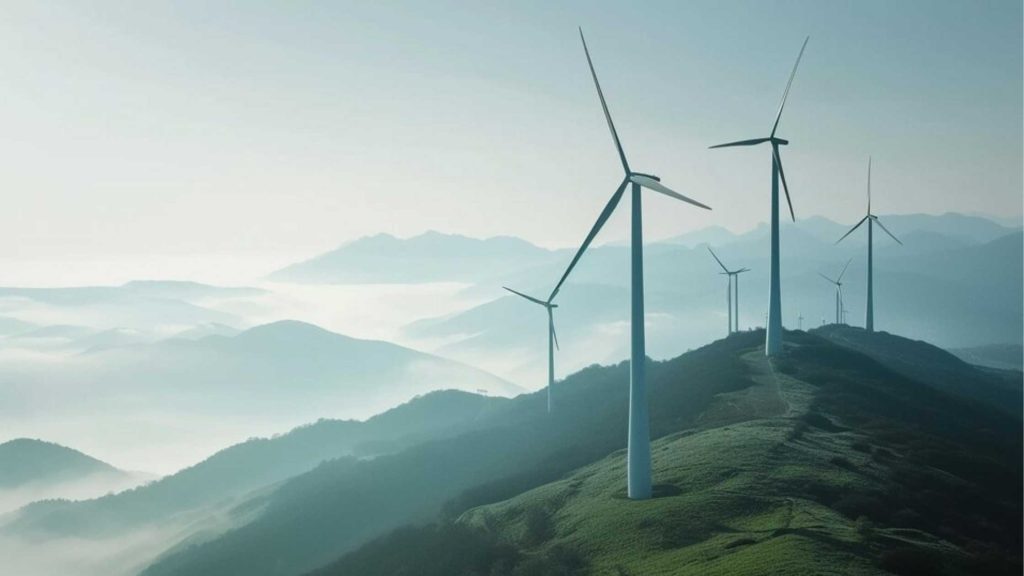

Wind energy is a form of renewable energy that makes use of the natural flow of air in order to produce electricity. Since countries are seeking out cleaner options as a replacement for fossil fuels, wind power has now become a significant element in the world’s move towards renewable energy. It may be generated either on land or at sea, the choice depending on the availability of appropriate wind resources.
What is Wind Energy?
Wind energy is produced by converting the kinetic energy of moving air into electrical energy. This is generally done with the help of wind turbines. When wind moves the blades of a turbine, the blades rotate a rotor connected to a generator. The generator then converts this mechanical energy into electricity.
The quantity of electricity generated depends on a number of factors, such as wind speed, the size of the turbine, where the turbine is situated, and the design of the turbine; areas which have consistent and strong enough winds are usually more appropriate for wind energy projects.
How Does a Wind Turbine Work?
A wind turbine consists of several important components, including blades, a rotor, a nacelle, a tower, and a generator. When wind flows across the blades, it causes them to rotate. This rotation turns the rotor, which drives a generator located inside the nacelle.
The electricity produced by the turbine can be passed on via electrical equipment and fed into the power grid. Nowadays, turbines are constructed so that they can automatically alter their operation in response to wind conditions in order to increase efficiency and protect the equipment.
Types of Wind Energy
Wind energy systems can broadly be divided into two categories: onshore wind energy and offshore wind energy.
Onshore Wind Energy
Onshore wind farms are installed on land, often in areas with strong and relatively consistent winds. They are generally easier to construct and maintain compared with offshore projects. Onshore wind power is already widely used in many countries.
Offshore Wind Energy
Offshore wind turbines are situated in bodies of water, most often in coastal or marine regions. The winds over the sea are usually stronger and more steady, which enables offshore turbines to produce a large amount of electricity. On the other hand, offshore projects generally have higher construction and maintenance costs due to their location and the difficult marine conditions.
Advantages of Wind Energy
Wind energy offers several environmental and economic benefits. Since wind is naturally replenished, it does not depend on a finite fuel supply. Once a wind farm is operational, its electricity generation does not require the combustion of coal, oil, or natural gas.
Wind power also produces very low direct greenhouse gas emissions during operation. It can contribute to energy diversification, reduce dependence on conventional fuels and create employment opportunities in areas such as manufacturing, construction, installation and maintenance.
Challenges of Wind Energy
Even though it has advantages, wind energy also has some limitations. Since wind is variable, electricity generation can vary depending on weather conditions. As a result, it is necessary to have appropriate grid management, energy storage, or other sources of electricity in order to ensure a reliable power supply.
Wind projects also need suitable land or marine areas and involve careful planning; possible concerns are the visual effect, noise, and the impact on birds and bats. The effects of these impacts can be reduced by proper site selection, carrying out an environmental assessment, and using modern turbine designs.
Wind Energy in India
India has considerable potential for wind power, particularly in several coastal and western and southern states. Wind energy has become an important part of India’s renewable energy sector, alongside solar and other renewable sources.
The creation of bigger and more efficient turbines, and greater investment in renewable energy, are all contributing to the expansion of wind power. There is also potential for future development of offshore wind in India, especially along its coast.
Also read: Solar Energy: Meaning, Types, Benefits and Limitations
The Future of Wind Energy
Technological improvements are making wind turbines increasingly capable of producing electricity from available wind resources. Larger turbines, improved blade designs, better forecasting and digital monitoring systems can help improve the performance of wind farms.
The future growth of wind energy is likely to depend not only on turbine technology but also on transmission infrastructure, energy storage, environmental planning and supportive renewable-energy policies. When combined with other renewable sources, wind power can play an important role in building a more diversified and lower-carbon energy system.
FAQs about Wind Energy
Wind energy offers a renewable method of producing electricity by making use of the natural flow of air. Even though problems such as changing wind conditions, the need for infrastructure, and environmental concerns have to be taken into account, advances in technology are increasing its potential. As long as proper planning is carried out and innovation continues, wind power can stay an important part of the move towards cleaner energy.